


I remember staring at a laptop in my off-duty hours, tired but stubborn, convinced there had to be a way to build income without sacrificing what I already had. Most veterans I meet aren't lazy — they simply haven't treated AI like a mission plan. In this post I'll walk you through a step-by-step, 90-day system that treats AI as leverage, not luck. Expect blunt clarity, a few personal war stories (yes, a tiny disaster or two), and a repeatable playbook you can run between shifts.
1) Why Veterans Are Wired for AI Income (Positioning & Clarity)
When I look at Veterans Entrepreneurship, I see a huge unfair advantage: we already know how to run systems. Most people try to build online income by guessing, posting random content, and hoping something hits. Veterans don’t win that way. We win with SOPs, checklists, and feedback loops.
That’s why AI income fits so well as a home-based business. The startup costs are low, the hours are flexible, and you can scale without asking anyone for permission. But only if you treat AI like leverage, not magic.
Colonel Dan Rivera: “Military routines are just repeatable SOPs waiting to run your business.”
Military SOPs = Online Business Systems
In the military, we plan, execute, review, and adjust. Online business is the same cycle:
Plan: pick a niche and message
Execute: publish content on a schedule
Review: watch what gets clicks, replies, and leads
Adjust: improve the next batch
AI just speeds up the parts that used to take forever—outlines, scripts, captions, and repurposing—so your execution stays consistent even with a job and a family.
No More “I Help People Make Money Online”
I’m going to be blunt: vague positioning kills momentum. The Your Marketing Message framework (from the original 2026-02-17 post) forces clarity. Here’s the kind of authority statement that actually works:
Example: “I help military veterans build automated AI income systems in 90 days.”
Specific niche. Clear outcome. Clear timeline. That’s credibility.
My Squad-Room Habit Became Content Batching
I used to watch leaders walk into the squad room with a plan, not a vibe. That habit followed me. Now I batch content the same way: one focused session, clear tasks, and AI helping me move faster—then I publish all week without scrambling.
10-Minute Exercise: Your One-Sentence Authority Statement
Who do you help?
What result do you help them get?
What’s the timeframe or method?
Write one sentence in 10 minutes. Don’t overthink it. Clarity becomes credibility, and credibility shortens the learning curve when you’re trying to build online income with AI.

2) Pick ONE Traffic Platform (Focus Trumps Scattershot)
I’ll admit it: when I started building Home-Based Businesses online, I tried five platforms at once. YouTube, TikTok, Instagram, a blog, and email. I told myself I was “covering all bases.” What I was really doing was splitting my attention until nothing worked. Once I picked one channel and treated it like a mission, my results became predictable.
In Freedom Accelerator Module 6, traffic breaks into three types:
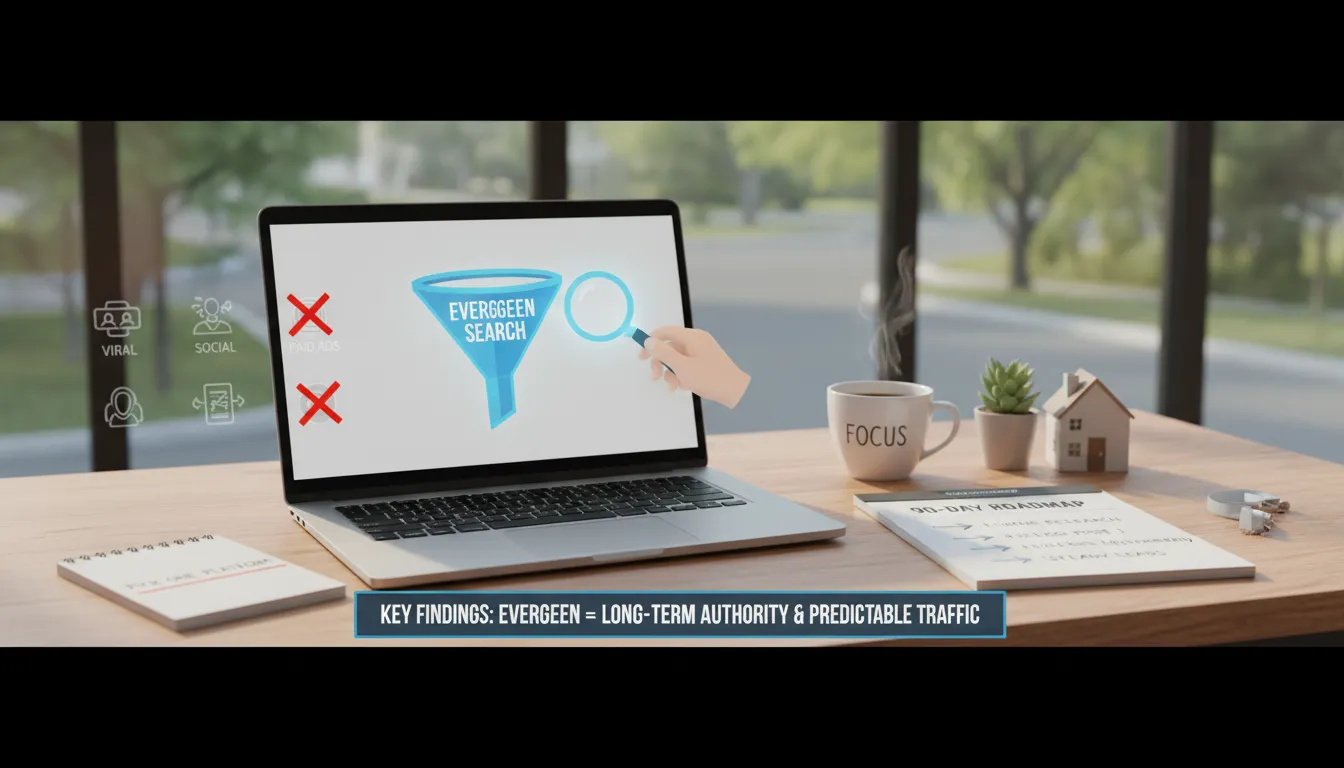
Evergreen search content = long-term leads that compound
Viral content = fast spikes, then it fades
Depth content = trust builders (stories, behind-the-scenes, proof)
If you’re a beginner following a 90-day roadmap, I recommend starting with evergreen content on a search-intent platform. Research and real-world results line up here: evergreen search produces long-term leads and builds authority because people are already looking for answers. You’re not begging for attention—you’re showing up when it matters.
Sara Nguyen, AI Strategist: "A single focused channel compounds faster than scattered effort across ten."
My Platform Decision Checklist (Pick One)
Audience: Where do your people search for help?
Time: Can you post 3–5x/week without burning out?
Resources: Camera? Quiet space? Just a laptop?
Format: Do you speak well, write well, or prefer short clips?
Examples: How I Match Platforms to Veteran Skillsets
YouTube (search): Great if you can teach on camera. Strong for “how-to” and the Three-Step Roadmap style videos.
Blog (search + long-form): Best if you write clearly and want SEO momentum for Home-Based Businesses.
TikTok (viral): Best if you’re quick on camera and can post daily, but expect spikes—not stability.
Mini-Case: One Script, Many Assets
I’ll write one long-form “Build Process” script with AI, then repurpose it:
1 YouTube video (8–12 minutes)
5 short clips for TikTok/Reels
1 blog post + 3 FAQ snippets
Action for Month 1: choose a single platform today and commit to 30 pieces of evergreen content. That milestone creates traction you can measure.
3) Turn Content Into Conversations (Systems + Daily Sprints)
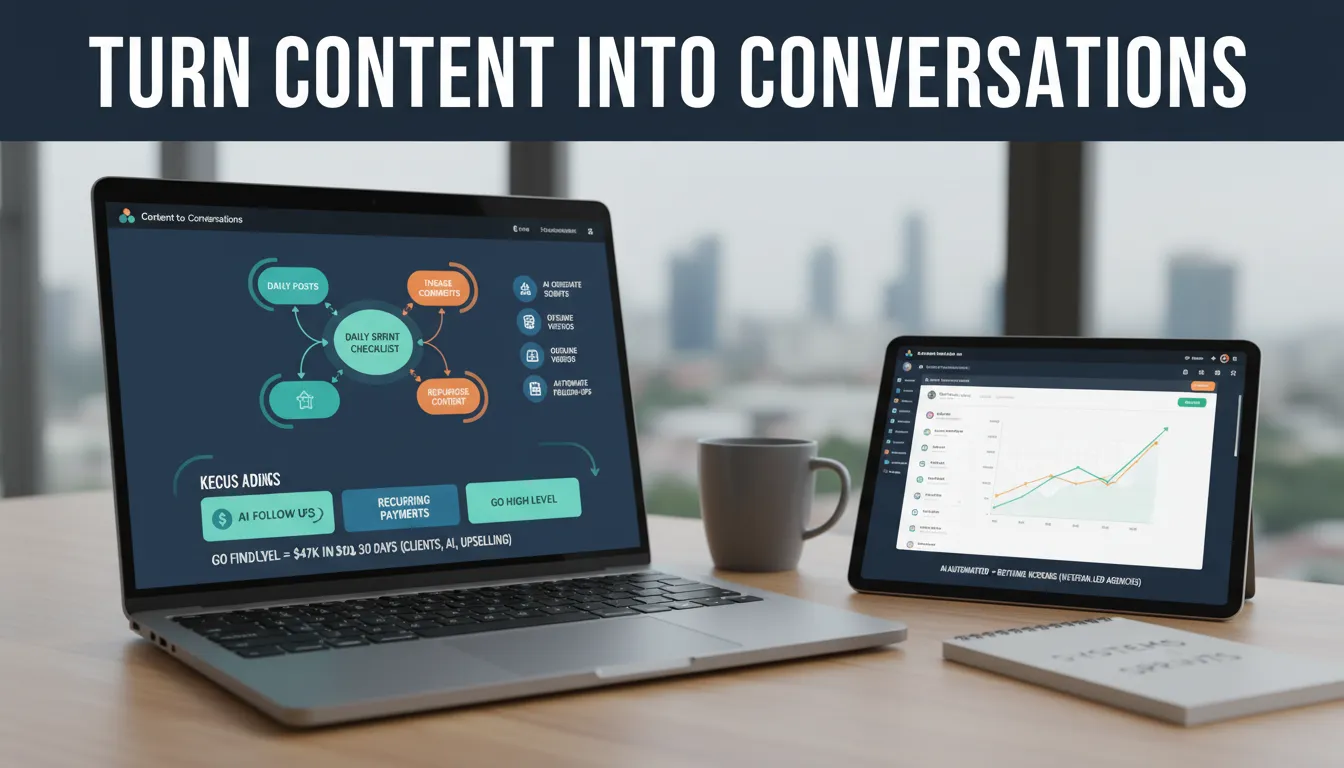
I don’t post content to collect likes like trophies. I post to start conversations that turn into calls, clients, and Recurring Payments. That’s the shift most veterans need: content is the opener, not the finish line.
Jason Morales, Growth Marketer: "Content that doesn't start a conversation is disguised therapy."
My Daily Sprint SOP (predictable leads, not random hope)
I document this as a simple SOP so I can run it even on low-motivation days. The Daily Sprint checklist keeps me moving:
Daily post (one clear problem, one clear next step)
10–20 value comments on posts where my buyers already hang out
Start 5 DMs from those comments (no pitching)
Repurpose one piece into multiple formats
AI makes execution easier (especially AI Follow-Ups)
AI doesn’t replace discipline—it removes friction. I use it to generate scripts, outline videos, and rewrite posts for different angles. The biggest win is AI Follow-Ups, because repetition and conversation-based follow-up increases conversions over time.
Repurposing recipe (one mission, many assets)
1 long video
3 shorts
1 blog
5 quote graphics
DM sequence I run (AI-assisted, still human)
I keep it simple and let AI draft the first version, then I edit it to sound like me:
Step | Message |
|---|---|
1) Value | “Saw your post about X. Here’s a quick checklist I use to fix that.” |
2) Case study | “Quick win: I helped a vet-led agency automate follow-up and book more calls in 7 days.” |
3) Soft offer | “Want me to send the template and show you how I set it up?” |
Why I use Go High Level for onboarding + upsells
Go High Level is built for client onboarding, pipelines, and automated follow-up. In one source case, it helped generate $47K in 30 days by tightening onboarding, running AI follow-ups, and upselling marketing services. That’s how conversations turn into retainers and Recurring Payments—with a system you can run daily.
4) Storytelling That Converts (The StepBack Framework)
If you’re offering Marketing Services, your content can’t just “get likes.” It has to move people into a clear Client Onboarding path. That’s why I use the StepBack Framework: Hook → Problem → Pivot → Process → Payoff. Structured storytelling builds trust and conversion way better than random engagement.
Dr. Lisa Carter, Narrative Coach: "Stories create the belief bridge buyers cross to become customers."
The StepBack Flow (and why it works)
Here’s the shift it creates: “I relate” → “I believe” → “I’m ready.” Storytelling doesn’t mean being fake—keep the truth and scars. People can feel the difference.
One of my best sign-up spikes came from a simple military hook: “In the service, we didn’t ‘try harder’—we followed a checklist.” That one line stopped the scroll and made my Repeatable Process feel real, not theoretical.
Use the right piece of the story for the right content
Reels/Shorts: heavy on the Hook + Problem
Long-form video/blog: teach the Process step-by-step
Case studies: lead with the Payoff (numbers, screenshots, outcomes)
Script timing (keep it tight)
Part | Time | What to say |
|---|---|---|
Hook | 0–5s | Pattern break + specific promise |
Problem | 5–35s | What’s not working (and why) |
Process | 35–95s | Your steps + tools + boundaries |
Payoff | 95–110s | Result + next action |
A/B test to lift conversions
Run the same hook twice, but change the payoff: version A uses a testimonial, version B uses a metric (“3 calls booked in 7 days”). Track which drives more DMs or opt-ins.
Transformation posts that collect testimonials
In Month 2–3, I write posts that invite proof: “If my checklist helped you, reply with your win.” Those replies become Payoff fuel for future content and make Client Onboarding easier because prospects arrive pre-sold.
AI prompts to draft StepBack scripts
Write a StepBack script for veterans building an AI income system. Include: Hook (5s), Problem (30s), Pivot (1 line), Process (60s), Payoff (15s). Tone: direct, empathetic. End with one CTA to start onboarding.
5) Install the 90-Day Execution Plan (Tactical Calendar)
I don’t “hope” my AI income system works—I run it on a tactical calendar. This is my Three-Step Roadmap: Build Process (weeks 1–2), document proof (weeks 4–12), then scale with mentorship and funding when the numbers say it’s time. AI multiplies discipline, but it doesn’t replace it.
Maya Thompson, Startup Coach: "A 90-day cadence creates the momentum most veterans are used to in service."
Month-by-Month Deliverables (Repeatable Process)
Month 1: niche clarity, pick one platform, publish 30 evergreen pieces, and Optimize your profile.
Month 2: optimize conversions, build an email list, refine your offer, Create transformation posts, and Get testimonials.
Month 3: double down on what works, automate follow-ups, systemize onboarding, and scale paid offers.
Weekly Rhythm (Cadence Beats Motivation)
I run the same weekly battle rhythm so execution stays simple:
Content Production Days: batch scripts, record, schedule (AI helps outline, edit, and repurpose).
Engagement Days: comments, DMs, value replies, and calls-to-action.
Optimization Days: review analytics, tighten hooks, improve CTAs, update profile, and Follow daily productivity plans.
Measurable Weekly KPIs (No Guessing)
KPI | Weekly Target |
|---|---|
Evergreen content | 7–8 posts/videos |
Email subscribers | +25 to +100 |
Conversions | 1–5 calls or sales |
SOPs + Feedback Loop (Build Process That Scales)
Every task becomes a simple SOP so it turns into a Repeatable Process. I keep a running doc with: what I did, the prompt I used, results, and the next tweak. If a post drives leads, it becomes a template.
My Personal Fail (Two Weeks Gone)
I once wasted two weeks chasing trends instead of finishing Month 1’s 30 evergreen pieces. My views spiked, but leads didn’t. The fix was boring: I went back to the 10K Fast Track Plan basics—profile, transformation posts, testimonials, daily plan—and the system started producing again.
6) Funding, Certification & Support (Practical Resources)
SBA Loans, Crowdfunding, and VBOCs (Funding You Can Actually Access)
I tell veterans to keep startup costs low in Month 1–2. Your “AI income system” should be proving demand, not burning cash. Once you have traction (views, leads, a few sales), that’s when funding helps you scale.
SBA Loans: Best for veterans who already validated an offer and need capital for ads, software, contractors, or inventory.
Crowdfunding: Great if you can tell a clear mission story and pre-sell (Kickstarter/Indiegogo) or raise support (GoFundMe).
VBOCs (Veteran Business Outreach Centers): Free advising that helps you tighten your plan, pricing, and lender readiness. They’re also a strong bridge to Veterans Affairs-connected resources and local partners.
SDVOSB Certification (Credibility + Government Contracts)
SDVOSB Certification (Service-Disabled Veteran-Owned Small Business) can open access to set-aside Government Contracts and adds instant credibility. But certification alone won’t save a weak business model.
Nina Alvarez, VBOC Advisor: "SDVOSB opens doors — but traction and documentation win contracts."
Translation: keep clean records, a simple capability statement, past performance (even small), and a repeatable delivery process.
IVMF Programs (Skill Gaps + AI Integration)
If you want structured training and mentorship, IVMF is a solid move. Their programs help you build the business fundamentals while integrating AI in a sensible way (see IVMF guidance dated 2025-07-29 on AI integration).
EBV (Entrepreneurship Bootcamp for Veterans)
V-WISE (women veteran-focused entrepreneurship)
O2O (Onward to Opportunity career + business skills)
Bootstrap vs. Mentorship (Decision Checklist)
Bootstrap if: you can create content daily, close sales yourself, and your tools cost < $200/month.
Seek mentorship if: you’re stuck on offer/pricing, need accountability, or want contracts/loan readiness faster.
Quick How-To: SBA Loans + Find Your Local VBOC
SBA Loans: gather 6–12 months bank statements, a 1-page plan, revenue proof, and a simple budget; then start at
sba.gov(look for SBA lenders and veteran support).Find a VBOC: search
“VBOC near me”or visitsba.gov/local-assistanceand filter for Veteran Business Outreach Centers.
7) Tools, Automation & Real Risks (What Worked — and What Broke)
The AI Tool stack I actually used (and why)
My core AI Integration wasn’t fancy—it was reliable. I used Go High Level to run onboarding, pipelines, and AI follow-ups so leads didn’t die in my inbox. The win wasn’t “more content.” It was faster response, cleaner handoffs, and fewer dropped conversations.
In one marketing services push, that setup helped generate $47,000 in 30 days by tightening onboarding and adding simple upsells at the right time—no extra hours, just better automation.
Recruiting AI Integration: “Fill in the Gaps” for second chances
I also tested a recruiting AI Tool called Fill in the Gaps to spot missing skills and match veterans to roles faster. Here’s the reality: in a study of 1,500 applicants, only 7% had perfect résumés. That means most good people get filtered out for formatting, wording, or missing keywords.
I used AI to:
Flag skill gaps and suggest training keywords
Rewrite bullets into clear outcomes
Standardize résumés so recruiters could compare fairly
Real risks: when an Error-Prone Tool makes confident mistakes
AI can absolutely break things. ProPublica reported DOGE’s VA-related AI tool misjudged values and lacked healthcare context. That’s the danger of an Error-Prone Tool: it can sound certain while being wrong.
The three failures I watch for:
Hallucinations (made-up facts)
Bad data in (messy CRM notes = messy outputs)
Misaligned prompts (the AI optimizes the wrong goal)
Eric Holden, AI Product Manager: “AI scales processes but also amplifies sloppy data — guardrails are essential.”
My safeguards SOP (before I scale anything)
Human-in-the-loop review for anything client-facing or compliance-related
Test with a small dataset first (1–4 weeks)
Run small A/B tests before full rollout
Document prompts, versions, and “do not do” rules
Rule: If it impacts money, health, or contracts—AI drafts, humans decide.
8) Wild Cards, Analogies & My Call-to-Action
A Repeatable Process: Treat This Like a Patrol Plan
Here’s the wild card most people miss: your AI income system isn’t a “side hustle.” It’s a patrol plan. First comes reconnaissance—research what your audience is already searching for and what they’ll pay to solve. Then a clear objective—your offer, stated in one sentence. Then rehearsed maneuvers—your content cadence, the same days each week, so execution becomes automatic. That’s a Repeatable Process, and it’s how you build momentum even with a Veteran Job and Flexible Hours.
What If One Weekend Built a $2K/Month Pipeline?
Run this hypothetical with me: what if you used one weekend to batch content, and that content fed a simple pipeline that produced $2,000/month? Not overnight. Not viral. Just predictable. I map the micro-steps like a mission brief: pick one platform, write one authority statement, batch scripts with AI, record in short blocks, and schedule follow-ups so conversations don’t die in your DMs. Small wins stack fast when the system is doing the remembering for you.
Systems deploy where motivation fades.
I lean on that line because I’ve lived the imperfect truth: juggling a job and a business can burn you out if you rely on willpower. I tried “late-night grind mode” and paid for it. What fixed it was a 90-day commitment with weekly KPIs—simple numbers I could hit even on rough weeks. As Maya Thompson, Startup Coach, says:
Commitment plus cadence beats sporadic hustle every time.
Alex’s Month 3 Win (Fictional, But Realistic)
Alex, an Army vet, kept his day job, posted on one platform, and followed the same weekly cadence. By month 3, he was at $1,200/month—nothing flashy, just consistent leads, cleaner messaging, and better follow-up.
My Call-to-Action (Do This Now)
Comment “SYSTEM” and I’ll send you my exact 90-day roadmap plus a fillable 90-day calendar template you can plug into your schedule. Then commit publicly (your comment counts), and tell one friend to hold you accountable for 90 days. Tonight, pick your platform, write your one-line authority statement, and schedule two production days. That’s how this becomes real.
