
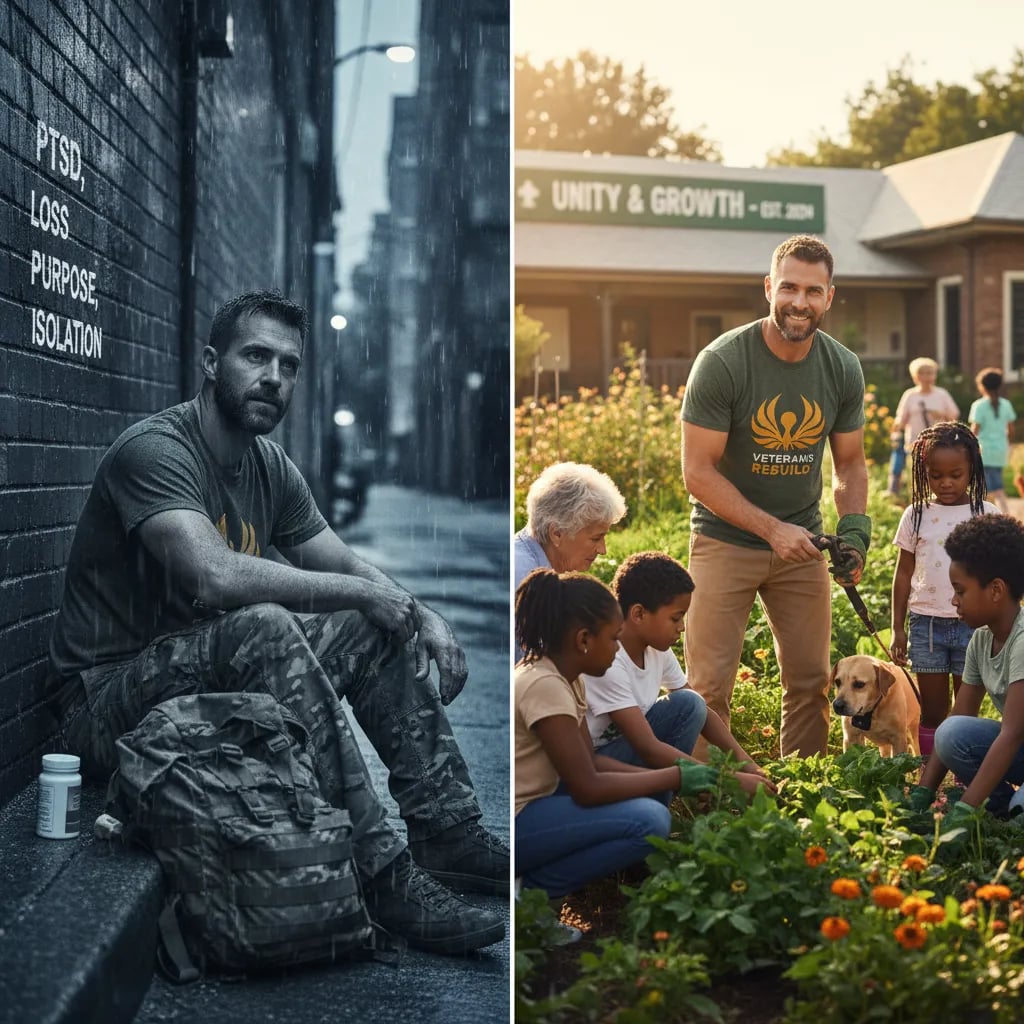


The morning after my final out, I woke up early out of habit—0500, no alarm needed. I just lay there staring at the ceiling, waiting for the day to tell me what it wanted. No formation. No brief. No team text lighting up my phone. I wasn’t lazy, and I wasn’t broken. I was experiencing something I didn’t have language for yet: the absence of familiar routine. In service, structure hides inside everything—food, fitness, feedback, friendships. Out here, you can have freedom and still feel unanchored. That’s the weird paradox at the center of veterans struggles after military service, and it’s why the transition from military to civilian life can feel like stepping off a moving vehicle and pretending your knees don’t wobble.
1) The Day the Mission Disappeared (and my brain panicked)
The first week after separation, I noticed something odd: my morning coffee tasted different. Not because I changed brands, but because there was no plan attached to it. No briefing, no gear check, no “move out” time. Just me, the mug, and a silence that felt heavier than my rucksack ever did. This was my first real taste of the transition from military to civilian life—and it was nothing like I’d expected.
When the uniform comes off, the “why” can vanish overnight. That’s the identity gap nobody warns you about. The chain of command structure—once invisible scaffolding—suddenly disappears. I didn’t realize how much it had shaped my days, my decisions, even my sense of self. As Carl Andrew Castro, PhD, puts it:
“For many service members, leaving the military isn’t just changing jobs—it’s losing an identity system that shaped daily life, relationships, and meaning.”
Without that system, motivation dies quietly. I found myself drifting through sleep, waking up irritable for no clear reason. I’d scroll my phone, numb and restless, picking fights with small problems—like the dishwasher or the weather. Even deciding what to make for lunch felt like a leadership decision, one I wasn’t sure I was qualified to make anymore.
This is the quiet grief over loss that comes with military identity loss—not a Hollywood breakdown, but a slow, everyday ache. It’s the loss of role, of belonging, of knowing exactly where you fit. Military Transition Theory calls this the strain of losing your identity, and it’s linked to depression and risky behaviors. But in the moment, it just feels like floating—untethered, unanchored, and unsure how to rebuild.
These are the real civilian reintegration challenges veterans face after service: not just finding a job, but finding a new mission when the old one disappears overnight.

2) The Stuff Nobody Warns You About: Work, People, and Silence
Leaving the military, I thought the hardest part would be missing the action. Turns out, it’s the quiet that gets you. Nobody really prepares you for the common challenges during transition—especially when it comes to work, people, and the silence that follows.
Finding Employment Challenges: More Than a Resume
Everyone says, “Just update your resume.” But finding employment challenges go way deeper. Translating military skills into civilian language is tough. There’s this weird shame when your experience gets labeled “non transferable skills.” I remember sitting in interviews, trying to explain what a squad leader does—watching eyes glaze over. For junior enlisted veterans, this hits hardest. You go from being responsible for lives to being told you’re “overqualified” or “not a fit.”
Social Integration Difficulties: The Glossary Problem
Then there’s the people part. Social integration difficulties are real. My funniest stories? They need a glossary. Civilian friends don’t get the acronyms or the humor. The camaraderie is gone, and suddenly, you’re the odd one out at the barbecue. That isolation can sneak up on you, even if you’re surrounded by people.
The Sneaky Spiral: Financial Insecurity and Stress
Even the most disciplined veterans can get caught in the spiral: employment and financial struggles, stress, and sometimes, worse decisions. Research shows that unemployment, poverty, and veteran homelessness risk are all connected. It’s not about willpower—it’s about losing the routine that kept you steady. The VA’s Transition Assistance Program (TAP) exists, but it can feel like another checklist, not a lifeline.
There’s also the stigma around mental health and asking for help. The “I’m fine” reflex is strong. But as Sara Kintzle, PhD, LMSW, says:
"Successful reintegration is less about ‘toughing it out’ and more about rebuilding purpose, connection, and routines that fit civilian life."
Civilian support resources are out there, but nobody warns you how hard it is to reach for them—or how loud the silence can be.
3) Why Hustle Culture Fails Me (and probably you)
When I left the military, I thought I could just “hustle” my way to success. That’s what every podcast and LinkedIn post seemed to say. But here’s the truth: hustle culture fails veterans like me—and probably you—because it ignores the absence of structure we face after service. Civilian reintegration strains aren’t about laziness or lack of ambition. They’re about losing the chain of command, the feedback loop, and the mission that kept us moving forward.
Let’s break it down. In the military, you always know who’s in charge, what the mission is, and how you’re doing. Out here? Hustle advice assumes you already have a scoreboard. But most veterans challenges after service start with not knowing what game we’re even playing. Motivation is a terrible sergeant: it shows up late, argues about everything, and disappears when you need it most. Maybe that works for influencers; it didn’t work for me.
Here’s a scenario I see all the time: two veterans start a business after leaving service. One chases the hype—late nights, endless coffee, “just grind harder.” The other builds boring systems: daily checklists, clear goals, steady routines. Six months later, the hustler is burned out and blaming themselves for not “wanting it enough.” The systems-builder? They’re still standing, maybe even thriving. As James Clear says,
“You do not rise to the level of your goals. You fall to the level of your systems.”
When motivation collapses (and it will), veterans often misread it as personal failure. The stigma and self-blame can keep us from reaching out for help or building new support systems. But the real problem isn’t us—it’s the lack of structure. Without a mission, a chain of command, or feedback, hustle culture is just noise. What we need is a new framework, not more hype.

4) The Mission Replacement Framework (the part I wish I’d had)
When I left the military, I lost more than a job—I lost my chain of command structure, my daily rhythm, and the clear sense of mission that had anchored my life. The hardest part of the military to civilian transition isn’t skill—it’s structure. That’s why I wish I’d known about the Mission Replacement Framework from day one. Here’s how it works:
Objective: Set a Clear Target
First, pick an objective that’s specific enough to plan around. Not just “be successful,” but something like: $4,000/month freelancing + mornings with my kids or finish my degree + part-time apprenticeship. This gives your post service well being a real anchor—something measurable, not just a vague hope.
Systems: Build Your Civilian Logistics
Next, create systems—the civilian version of logistics and comms. For me, that meant setting up a simple website, posting weekly content, and automating emails. In business, this is “traffic, content, automation.” In life, it’s your support network, your calendar, and your routines. These systems become your new support structure, a protective factor proven to ease the transition to civilian life.
Execution Rhythm: Daily Actions, Not Willpower
Finally, nail down your execution rhythm. Forget relying on motivation. Instead, create a tiny daily checklist—like 30–60 minutes a day on your core action. Even on bad days, you can check the box. This is your feedback loop: track your metrics, review progress weekly, or set up a quick accountability text with a friend or mentor. It’s the civilian answer to the military’s feedback loop.
Jocko Willink said it best: “Discipline equals freedom.”
Freedom in the transition to civilian life isn’t about losing structure—it’s about building your own. With a clear objective, simple systems, and a daily rhythm, you can rebuild purpose and stability after service.
5) Proof Without Bragging: Small Wins, Boring Systems
When I left the military, I thought “proof” of progress had to be loud—a new job, a big win, something to post about. But real proof, especially when you’re rebuilding after service, is quieter. For many of us, veteran physical and mental health struggles—like post traumatic stress disorder, depression and anxiety, or even substance use disorders—make the big wins feel out of reach. The stigma around asking for help can make it even harder to see progress.
Here’s what proof looks like for me now:
- A calmer week, where I didn’t snap at my family.
- Paid invoices, even if the number isn’t huge.
- Three workouts logged, not skipped.
- One less night lost to doom-scrolling or old habits.
These aren’t headline moments, but they’re evidence. Systems—like a daily checklist, a set bedtime, or a weekly call with a buddy—give my competence a container again. I don’t have to rely on motivation, which comes and goes, especially when depression or anxiety are lurking. Instead, I lean on rhythm. Some days I slip. That’s normal. But the system pulls me back—like a ruck packed with intention, not just thrown together. If you’ve ever hiked with a poorly packed ruck, you know: every mile hurts. But pack it right, and you can go farther with less drama.
If you’re struggling, remember: support is part of the system. The VA, peer groups, or therapy aren’t signs of weakness—they’re tools. As Brené Brown says,
“Talk to yourself like you would to someone you love.”That means giving yourself credit for the small wins, and building boring, repeatable systems that make those wins possible—even on the tough days.

Conclusion: Freedom Isn’t the Absence of Structure
When I left the military, I thought freedom meant waking up whenever I wanted, with no one telling me what to do. But after a few weeks, the excitement faded. The lack of structure wasn’t liberating—it was disorienting. Like many veterans navigating the transition, I realized that what I missed wasn’t the orders or the uniforms. It was the sense of purpose and the daily rhythm that gave each day meaning.
That’s the hidden challenge behind veterans transition challenges. We don’t lose our skills or our drive; we lose the mission that gave our actions weight. As Simon Sinek says,
“Working hard for something we don’t care about is called stress; working hard for something we love is called passion.”Without a mission, even simple tasks can feel overwhelming. That’s why so many of us drift, or struggle to connect with support resources and benefits that could help our post service well being. The gap isn’t just about paperwork—it’s about purpose.
Here’s what I’ve learned: structure isn’t the enemy. Unchosen structure is. The military gave us a framework, but now, we get to choose our own. Today, I still wake up early—not because I have to, but because I want to. My calendar isn’t packed with dramatic transformations. It’s just three simple checkmarks: write, connect, move. That’s my new mission, built with systems, not hype.
Freedom isn’t the absence of structure. It’s choosing your own. If you’re navigating the transition, remember: you don’t have to do it alone, and you don’t have to wait years to find your footing. Follow the journey. Let’s build the next mission together—one simple, intentional step at a time.
