

I used to treat motivation like pre-workout: slam it, feel invincible, then crash hard. One Monday I made a color-coded plan that looked like a NASA launch schedule… by Friday it was just a guilt document. The weird part is: in the military I never needed a pep talk to follow an SOP. I just followed it. So I started asking a quieter question: what if online income isn’t about getting fired up—what if it’s about building something that keeps moving when I’m not?
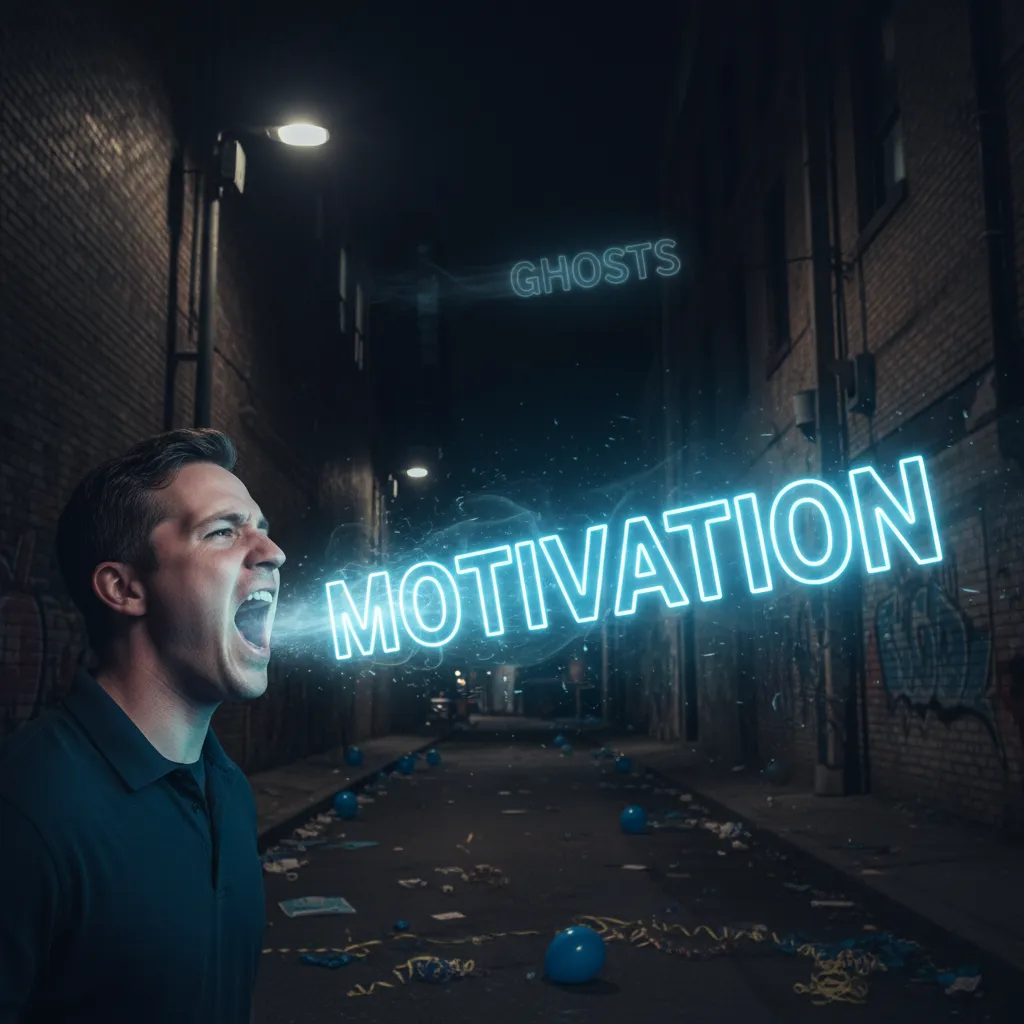
Motivation Is Loud (and Then It Ghosts You)
I know this cycle too well:
Fired up on Monday
Slipping by Wednesday
Ghosting your goals by Friday
Monday me is a beast. New plan. Fresh notebook. Big promises. Then Wednesday shows up with real life. A late meeting. A kid with a fever. A brain that feels like it’s running on fumes. By Friday, the “new routine” is sitting in the corner like an unopened box.
The “Perfect Timing” Trap
I used to tell myself I’d start when things calmed down. When work wasn’t crazy. When the house was quiet. When I had “a clean week.” That week never came. I kept waiting for perfect timing like it was a real place I could arrive at.
That’s when it hit me: You don’t need more motivation. You need fewer decisions. Because every day I waited, I was making the same choice again: “Do I feel like it?” And that question is a trap.
Quick Gut-Check: What Motivation Depends On
When I’m honest, motivation rides on three things I don’t control as much as I pretend:
Energy (sleep, stress, life)
Emotions (mood swings, doubt, frustration)
Timing (interruptions, emergencies, other people)
Motivation is a mood. And moods change fast.
Why Reels Don’t Pay Your Bills
Motivation advice sounds amazing in a 20-second reel. “Grind.” “No excuses.” “Want it more.” Cool. But it doesn’t survive a sick kid and a late meeting. That’s why I started leaning into systems over motivation and building simple productivity systems that run even when I’m not at my best.
Even big companies know this: AI gets real ROI in customer support automation and follow-ups because it removes human volatility. No moods. No “not today.” That’s the whole point—build better systems, and you stop depending on hype.
“You do not rise to the level of your goals. You fall to the level of your systems.” — James Clear
What the Military Taught Me About Boring Wins
I still remember those early mornings—burnt coffee, cold air, and the sound of gear getting tossed onto a table for inspection. Nobody was “inspired.” We were half-awake, moving on routine. We checked straps, batteries, water, comms. Not because it was fun, but because boring kept people safe.
In the military, I didn’t wake up motivated to follow SOPs. I followed them anyway. And things worked. That’s the part I carried into veteran online business: the win isn’t the hype. The win is the repeat.
Systems Over Motivation: SOP Thinking for Online Business
Motivation is a surge. It hits hard, then fades. A system is a generator—steady output, even when you’re tired, stressed, or busy. That’s why systems over motivation isn’t a slogan to me. It’s how missions got done.
Businesses scale the same way. The founders who last don’t rely on mood. They build vertical, repeatable processes—the same steps, in the same order—so results stay consistent even when they’re running on fumes.
My “Minimum Viable SOP” for Content
I don’t try to “feel creative.” I run a checklist. Here’s a simple SOP you can steal:
Capture one idea (note app, voice memo, or a sticky note).
Draft a quick post (messy is fine).
Schedule it (so it ships even if life happens).
Recycle it into 3 smaller pieces (email, short post, headline).
That’s it. Define the steps once, then run them on repeat. It’s not exciting. It’s reliable. And reliable is what gets paid daily.
“Discipline equals freedom.” — Jocko Willink
Build-It-Once Systems That Pay You on Tuesdays
I used to think “boring” meant I was doing it wrong. Then I watched boring pay the bills. Not on launch day. Not when I felt fired up. On a random Tuesday when I was busy living my life.
That’s the whole point: build once → system executes daily. No hype required.
Boring Automations: Funnels and Follow-Up That Don’t Care About Your Mood
My best weeks aren’t the ones where I grind harder. They’re the ones where my funnels and follow-up run like an SOP:
Content scheduled in advance so traffic keeps coming even when I’m offline.
Funnels capturing leads automatically with one clear opt-in and one clear next step.
Automated email sequences that educate, build trust, and sell while I sleep.
Seth Godin: “You don’t need more time, you just need to decide.”
One Weekend Build, Weeks of Drip Follow-Up
Here’s what “build it once” looks like in real life:
Saturday: Write one lead magnet + one landing page.
Sunday: Set a simple funnel and a 7–14 day follow-up sequence.
Next 30 days: Scheduled posts point to the funnel. The emails do the selling.
Opinionated take: more tools won’t fix chaos. Tight loops will. One traffic source. One funnel. One follow-up system. Improve the loop, not the stack.
Recurring Revenue Models = The Grown-Up Version of Hustle
Once the system works, I stop chasing one-time wins and lean into recurring revenue models: subscriptions, retainers, even usage-based pricing. It’s the same reason Enterprise SaaS loves contracts—predictable revenue lowers the pressure to “feel motivated” every day. For solo creators, that can look like a membership, templates library, or a tiny micro-SaaS.
The AI Advantage: My ‘Digital Teammate’ Doesn’t Need Coffee
I used to think I needed the perfect morning: strong coffee, the right playlist, and a clear calendar. If any of that was missing, my “motivation” disappeared. Then I built a system with a digital teammate.
Here’s the line I keep coming back to: AI doesn’t get tired… doesn’t procrastinate… doesn’t need coffee. It also doesn’t care if it’s Monday or Friday. It just runs.
Satya Nadella: “AI is the defining technology of our times.”
4 automations I lean on (so I make fewer decisions)
Generative AI content: I batch outlines, hooks, and drafts so I’m never staring at a blank page.
Respond to leads fast: Simple templates + AI help me reply in minutes, not “when I get around to it.”
Follow-up automatically: A short email sequence runs daily, like a steady patrol—no hype required.
AI driven analytics: I ask, “What’s working?” and it summarizes clicks, replies, and topics worth repeating.
AI Agents Workflows: like a shift change for repetitive tasks
I think of AI agents workflows like handing off the watch. One agent drafts content, another tags leads, another updates my tracker. Nothing heroic—just consistent execution. That’s the whole point of systems.
A “Customer Service Platform” mindset (even for creators)
Even if you’re solo, people expect quick, clear answers. I treat my inbox like a customer service platform: consistent tone, fast responses, and clean handoffs. Tools like Zendesk AI and Salesforce Einstein show what’s possible (not endorsements), and the market agrees—customer experience automation is projected to hit $42B by 2032.
None of this is cheating. It’s leverage—so the system works when I don’t.
My Simple System Stack (and the Part I Wanted to Overcomplicate)
I kept telling myself I needed “better tools.” What I really needed was fewer decisions. In AI business operations, the win isn’t fancy software—it’s reducing decision load with repeatable steps, like business operations logistics: clear inputs, clear outputs, same route every time.
Here’s the clean stack I finally committed to (and it’s the same one I teach):
One core offer / One traffic source / One funnel / One email follow-up system.
“You can do anything, but not everything.” — David Allen
The messy moment: five tools, five half-built dashboards
I tried running five platforms at once—scheduler, CRM, funnel builder, analytics, AI writer—thinking complexity meant “pro.” Instead, I ended up with five half-built dashboards and zero consistent output. Every day started with tool decisions, not mission actions. That’s when systems over motivation clicked for me: More tools won’t fix chaos. Better systems will.
Starter SOP checklist (3 steps each)
One core offer
Write the promise in one sentence.
List 3 deliverables and a clear price.
Draft a simple FAQ to handle objections.
One traffic source
Pick one platform and one content type.
Batch 5 posts with AI support.
Post on set days, same time.
One funnel
Create one landing page with one CTA.
Add one lead magnet or booking link.
Track opt-ins weekly, adjust one thing.
One email follow-up system
Write a 5-email sequence (value, story, offer).
Automate send + tagging.
Review replies twice a week.
That’s the mission: build systems, reduce stress, create predictable income—no hype speeches required.
Conclusion: The Day Motivation Didn’t Show Up (and the System Did)
I still remember the morning I opened my “guilt document.” It was just a messy list of ideas, half-finished drafts, and promises I made to myself when I felt fired up. That day, motivation didn’t show up. No spark. No grindset. Just real life and a tired brain.
But the system still ran.
While I stared at that guilt doc, my scheduled content went out. My email sequence kept moving people toward my offer. Leads still got replies. The boring stuff handled the work I didn’t have the energy to do. That’s when systems over motivation stopped being a catchy line and became a relief I could feel in my chest.
“Focus is the new IQ in the knowledge economy.” — Cal Newport
That quote hits different when you realize focus isn’t a personality trait. It’s built into your setup. And the research is clear: scalable, systemized operations are the common thread in profitable AI businesses and subscription models. Predictability beats bursts of effort. That’s why AI systems for income and recurring revenue models work so well together—because they don’t require you to be “on” every day.
The 72-Hour Stress Test
If I had to leave tonight for a surprise 72-hour field problem, what keeps selling? Not my willpower. Not my mood. The system. The funnel still captures leads. The follow-up still runs. The offer still gets presented. I might come back tired, but I won’t come back to zero.
One Small Next Step
This week, I’m not asking you to rebuild your whole business. Pick one automation and build it. Just one. Maybe it’s a welcome email that sends automatically, or a simple follow-up sequence, or scheduled posts for the next seven days. Ignore everything else (even if it bugs you a little).
You don’t rise to the level of motivation. You fall to the level of your systems. Build better ones.
